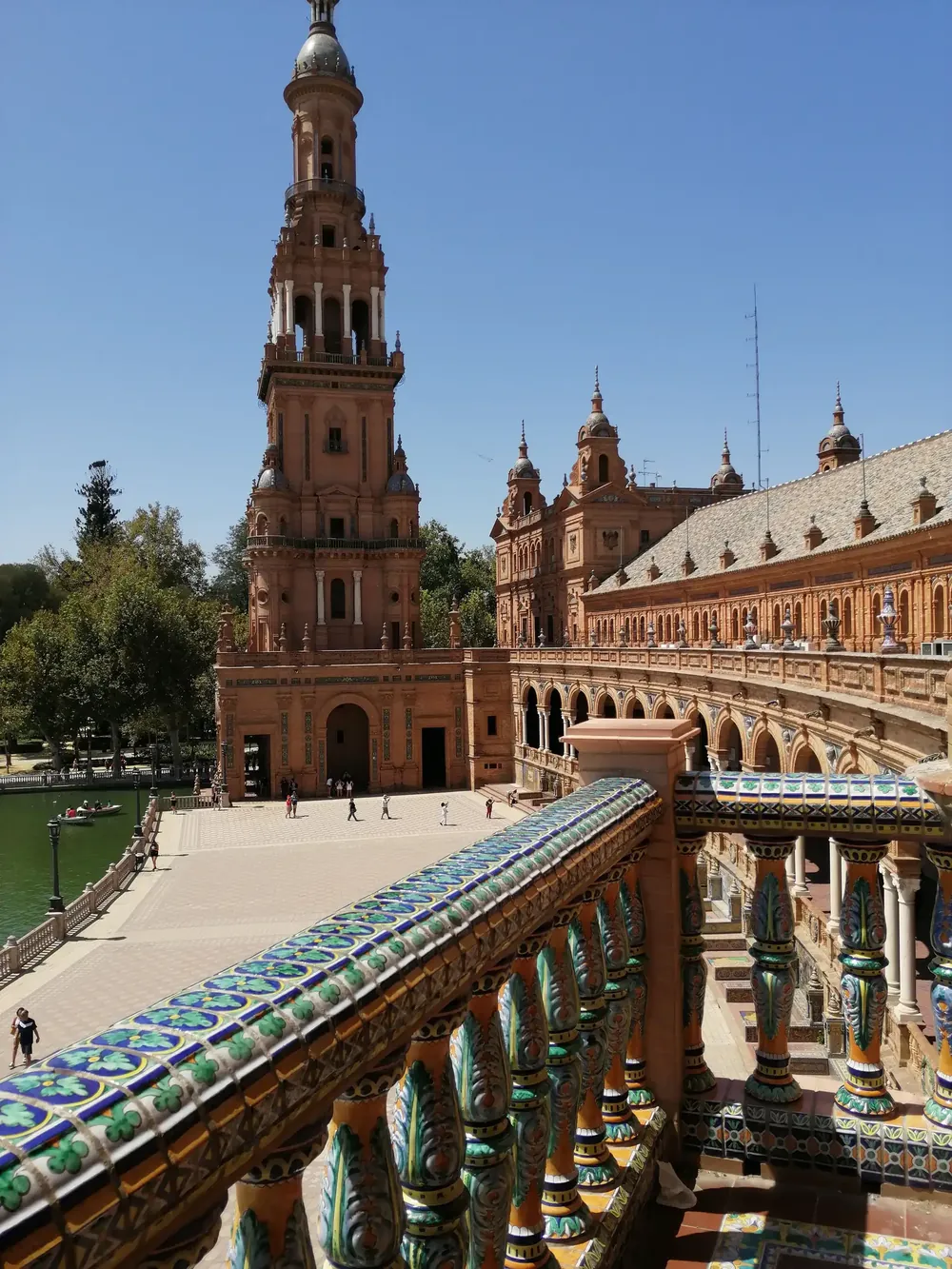
Sevilla does not offer a neutral version of Spain. It gives you the south with full conviction: orange trees, shaded patios, tiled walls, church bells, late dinners, river light, narrow streets, public ritual, heat, music, family, history and evenings that seem to begin just when other places are closing down.
The central promise of living in Sevilla is rhythm. The city does not simply give you a new address. It asks you to adjust your sense of time.
For some people moving to Sevilla, that is exactly the attraction. This is a city where culture is not kept for weekends or museums. It appears in the calendar, the street, the architecture, the meal, the greeting, the season and the way people gather. Semana Santa and Feria are the clearest examples, but they are not isolated spectacles. They reveal how deeply public life, tradition and emotion are woven into the city.
Sevilla is one of Spain’s most atmospheric cities, but atmosphere should not be mistaken for softness. The city has strong habits. Summer heat is serious. The pace can be slower than newcomers expect. Professional opportunity exists, but it is not Madrid’s market or Barcelona’s international ecosystem. Housing, neighbourhood choice and daily routines need to be thought through carefully, especially if you are arriving with work, family, school needs or expectations shaped by northern Europe.
That nuance makes Sevilla more interesting, not less. It is a city with a powerful sense of place. You know where you are.
The historic centre is one of the largest in Europe, but it does not feel like a frozen museum. People live among the monuments, cut through narrow streets on errands, meet under awnings, queue at bakeries, gather in plazas and move around the heat with a knowledge that takes time to learn. The beauty is not only architectural. It is behavioural.
The Sevilla neighbourhoods each show a different part of the city’s personality.
Santa Cruz is intricate and cinematic, with courtyards, narrow lanes, visitors, shade, tiled details and the kind of beauty that can feel almost unreal. It is wonderful to walk through, but living there means accepting intensity and tourism. El Arenal sits closer to the river, the bullring, restaurants and the city’s old commercial life. It feels central, social and connected to Sevilla’s public face.
Triana is not just “authentic”. It has its own pride, its own ceramic tradition, its own relationship with the river and a feeling of being beside Sevilla rather than simply inside it. People who love Triana often love that slight separation. Los Remedios is more residential, practical and family-oriented, with wider streets and a calmer structure. Nervión brings transport, shopping, offices and a more modern city rhythm. Alameda has a younger, more creative and social energy, with bars, music, apartments, families and late nights sharing the same space.
For remote workers, Sevilla can be a beautiful and relatively approachable base, especially compared with Spain’s largest cities. But the workday needs to respect the climate and the city’s timing. For families, the city offers schools, tradition, community and a strong sense of local life. For buyers, it offers architectural character and long-term cultural appeal, though property choices should be assessed carefully for condition, location, legal status and summer comfort. For people seeking deep integration into Spanish life, Sevilla can be one of the most rewarding cities in the country.
The cost of living in Sevilla can feel more accessible than Madrid, Barcelona or San Sebastián, but affordability depends on neighbourhood, housing quality, renovation needs, transport and lifestyle. A charming old apartment can hide practical issues. A quieter residential district may serve everyday life better than the most photographed street. Moving to Sevilla works best when romance and realism are allowed to sit at the same table.
Sevilla expat life is present but not dominant in the way it is in some coastal cities. That is part of the appeal. The city invites you toward Spanish, and more specifically Andalusian, daily life. Language, patience and local curiosity matter. If you arrive expecting the city to adapt entirely to you, Sevilla may feel difficult. If you arrive willing to learn its rhythm, it can become unusually generous.
The practical side of relocating to Sevilla should support that adjustment. Housing, registration, banking, healthcare, work status, tax position, schools, transport and legal steps all need planning. But the goal is not to flatten the city into a checklist. The goal is to arrange the essentials well enough that you can participate in the life around them.
Sevilla creates a life for people who want place, tradition and warmth to matter every day. It is not the best choice for someone seeking a neutral international base or the fastest professional market. It is for someone who wants to belong somewhere with a strong identity and is willing to be changed by it.
Choose Sevilla if you want Spain to feel deep, rooted and unmistakably alive. The city will ask you to slow down in some ways, pay attention in others and stop treating time as something to optimise constantly. For the right person, that is not a compromise. It is the reason to come.